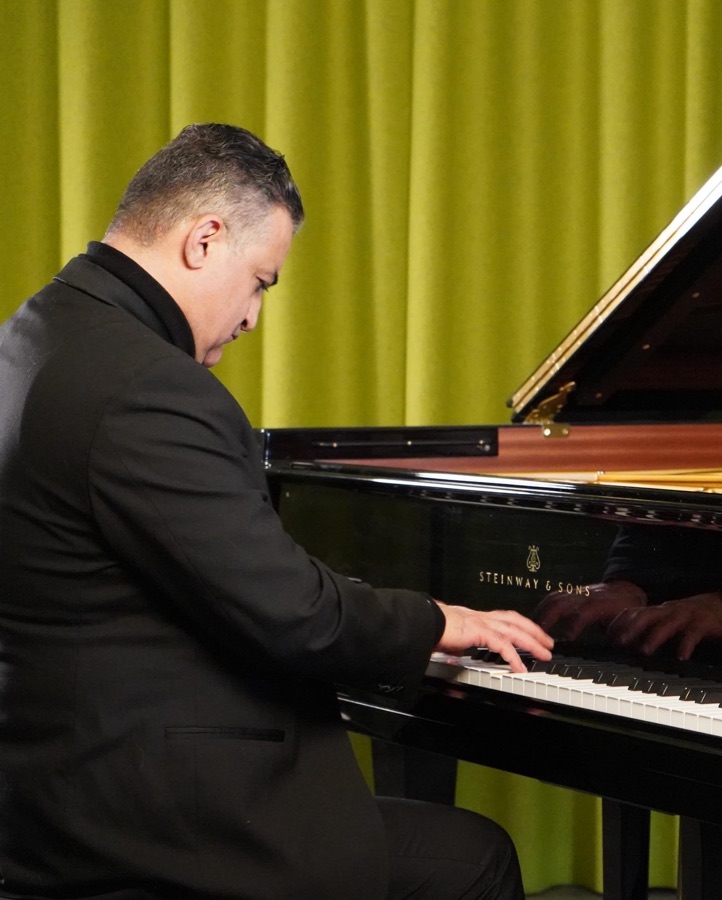
By Aria Farjadi, concert pianist and piano teacher (Farjadi Piano School, Copenhagen). I have not tested these models for this guide. The comparison is based on the manufacturers' and retailer's specifications — and on what I look for as a teacher when a student buys a first piano.
The three things that matter most
1. Weighted keys
Choose 88 weighted keys with a hammer action. That is what lets your fingers control soft and loud playing — and what makes practice transfer to a real piano.
2. A proper pedal
A single sustain pedal is enough to begin with. A cabinet with three pedals gives a steady footing and suits children. Advanced players often miss half-pedalling.
3. Good headphones
In a flat you will mostly play with headphones, so check the headphone output. The built-in speakers matter more in a house.
The models
All models below are sold by Thomann, which ships internationally. The link opens Thomann's shop for your country, where you see the current price in your currency.
Yamaha P-225
- 88 keys, Graded Hammer Compact (GHC) action
- 192-note polyphony
- 2 × 7 W speakers
- Bluetooth audio
- 11.5 kg, sustain pedal included
Specifications according to the retailer.
Suits: For small homes and anyone who wants to move the piano, from a well-known brand. A stand and a three-pedal unit are sold separately.
Kawai ES-120
- 88 keys, Responsive Hammer Compact (RHC) action
- 25 sounds
- 192-note polyphony
- Bluetooth MIDI and audio
Specifications according to the retailer.
Suits: Same target as the P-225. Choose between the two by trying the keys — they feel different.
Thomann DP-51
- 88 weighted hammer-action keys with Tri-Sensor
- 40 sounds
- 128-note polyphony
Specifications according to the retailer.
Suits: For the beginner who wants a cabinet and a hammer action without a big budget.
Kawai CN-201
- 88 keys, Responsive Hammer III action
- 19 sounds
- 192-note polyphony
- 2 × 20 W speakers
- Bluetooth audio and MIDI, USB
Specifications according to the retailer.
Suits: For families where several people will practise for years: a cabinet, stronger speakers and a full-size hammer action.
Yamaha P-525
- 88 keys, GrandTouch-S action
- 542 sounds incl. Yamaha CFX and Bösendorfer Imperial
- 256-note polyphony
- 2 × 20 W + 6 W speakers
- Bluetooth audio and MIDI, 22 kg
Specifications according to the retailer.
Suits: For advanced players and adults returning to the piano who want a portable instrument with a large sound library and strong speakers.
Questions
Is an affordable piano good enough for a child who is starting?
Yes, if it has 88 weighted keys with a hammer action and a pedal. That is the minimum. Avoid keyboards with light, springy keys for piano lessons.
Cabinet or portable?
A cabinet stands firmly, has three pedals and looks like furniture. A portable piano takes less space and can be moved, but needs a stand and often a pedal unit, sold separately.
Can I return it if it doesn't feel right?
Thomann offers a money-back period. Read the retailer's terms before you buy — they apply, not ZOZIZA's.